Amazon FBA Private Label Strategy: How to Launch, Protect & Scale a 7-Figure Brand
Building a successful Amazon FBA Private Label business in 2026 requires more than just sourcing cheap products. Learn the step-by-step roadmap for trademark verification, Amazon Error 5665 compliance, SKU taxonomy, and honeymoon phase PPC launches.
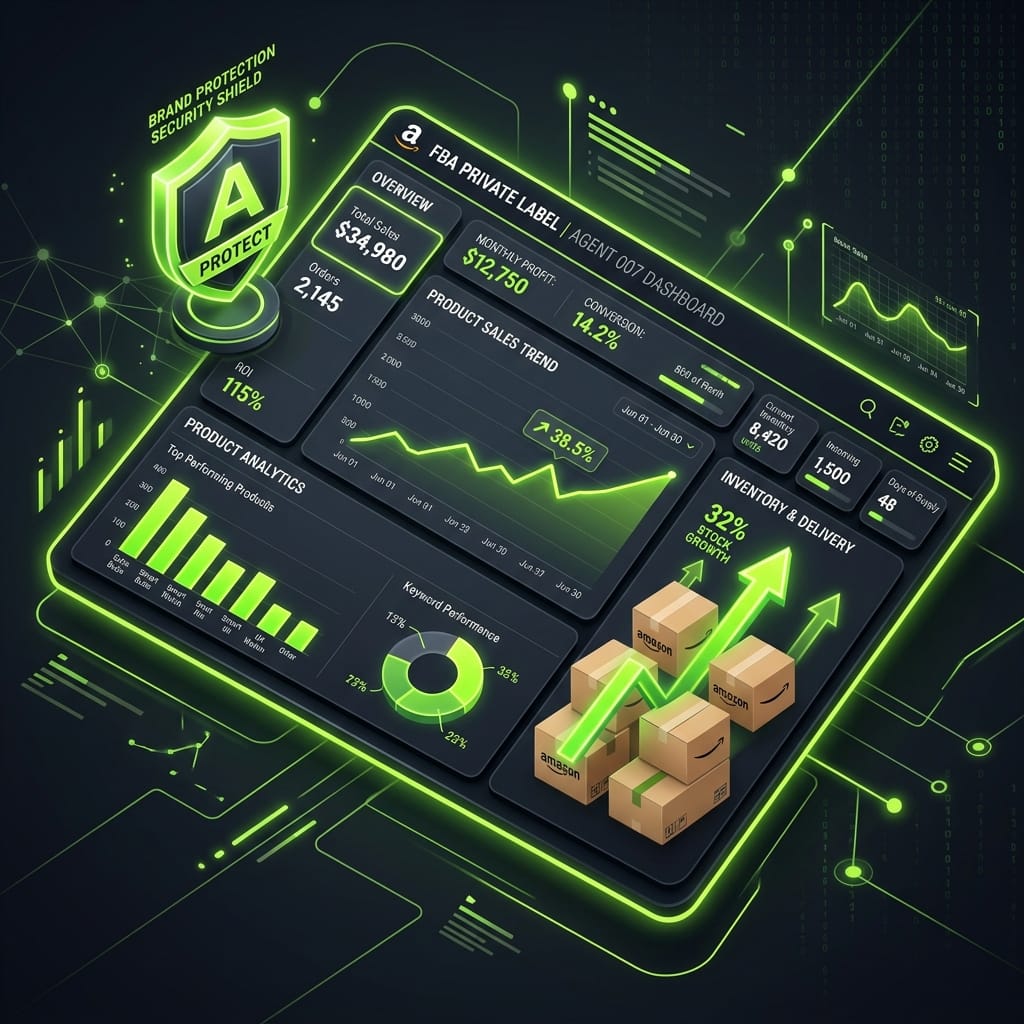
1 Selecting a Defensible Niche & Calculating Real Net Margins
What is Amazon FBA Private Label? Private Labeling is the process of manufacturing custom products under your own brand identity and utilizing Amazon’s Fulfillment by Amazon (FBA) network for storage, shipping, and customer service.
The most common mistake new Private Label sellers make is selecting high-competition, low-margin products based solely on volume metrics. In 2026, sustainable FBA profitability requires a minimum 30% Net Margin after taking into account land costs, FBA fulfillment fees, storage, and ad spend.
Before sourcing products, sellers should audit policy requirements on Amazon’s Selling Registration Guide and consult official Seller Central Brand Guidelines.
| Criteria | Target Benchmark | Why It Matters |
|---|---|---|
| Retail Price Point | $30 – $90 per unit | Higher prices absorb advertising costs and FBA fee changes |
| Product Weight | Under 3 lbs (Small/Large Standard) | Minimizes initial ocean freight and monthly storage overhead |
| Target Net Profit Margin | 30%+ after FBA & Ad spend | Ensures financial buffer for PPC expansion and returns |
2 Brand Naming & Overcoming Amazon Error 5665
Before manufacturing product packaging, you must verify that your proposed brand name passes Amazon policy checks. Attempting to list an unregistered brand name in Seller Central frequently triggers Amazon Error Code 5665.
Error 5665 occurs when Amazon blocks a seller from creating a listing under a brand name that has not been approved in Amazon’s database. To fix this error, sellers must submit photographic proof of the brand name permanently affixed to physical product packaging.
To prevent expensive re-branding cycles and listing delays:
- Run candidate brand names through our Amazon Brand Compliance Checker to test catalog availability and USPTO conflicts.
- Generate catchy, available storefront display names using the Amazon Store Name Generator.
- Ensure physical product photos clearly display your brand printed directly on the product (stickers are often rejected by Amazon support).
3 Standardizing Product SKU Taxonomy for FBA Operations
As your product catalog expands across multiple SKUs, variations, and multi-packs, unstructured seller SKUs cause inventory chaos across WMS (Warehouse Management Systems) and FBA shipping plans.
Adopt a structured format like [CATEGORY]-[BRAND]-[MODEL]-[CONDITION] (e.g., KIT-AURA-100-NEW). Use our free Amazon SKU Generator Tool to quickly auto-generate bulk, standardized merchant SKUs for your product catalog.
4 Amazon Brand Registry & Intellectual Property Protection
Enrolling in Amazon Brand Registry is mandatory for long-term survival. Brand Registry unlocks vital listing features that boost conversion rates:
A+ Content & Brand Stores
Replace plain text descriptions with high-converting image modules, comparison tables, and custom storefronts.
Sponsored Brands Video
Unlock high-converting video ad formats that capture over 40% higher click-through rates in mobile search results.
Automated Counterfeit Defense
Report unauthorized Buy Box hijackers and IP infringers directly via Amazon Project Zero & Transparency.
Brand Analytics Search Data
Access Search Query Performance reports to view real customer search terms and competitor conversion shares.
5 The Honeymoon Launch Phase & High-ROAS PPC Strategy
When your inventory first arrives at Amazon fulfillment centers, Amazon grants your listing a 30-to-45-day “Honeymoon Period” where organic keyword ranking velocity is weighted higher.
- Vine Program Reviews: Enroll in Amazon Vine immediately to secure your first 15-30 verified customer reviews.
- Exact Match PPC Targeting: Launch tightly targeted Sponsored Products campaigns on 5-10 core high-intent keywords.
- Conversion Optimization: Ensure primary images feature main product benefit overlays and high-contrast callouts.
For sellers seeking hands-off campaign growth, explore our Amazon PPC Management Services and full-service Amazon Account Management.
6 Frequently Asked Questions
Once you submit clear, unedited real-world photos of your product and packaging with the brand name permanently affixed, Amazon support typically reviews and approves Error 5665 requests within 24 to 48 hours.
Yes, you can launch using Error 5665 brand authorization. However, you will not have access to Brand Registry, A+ Content, or Buy Box hijacking protection until you apply for a trademark via USPTO or Amazon IP Accelerator.
A typical starting inventory and launch budget ranges from $3,000 to $7,000, covering initial inventory order, shipping, inspection, professional photography, trademark application, and launch PPC ad spend.

1 thought on “Amazon FBA Private Label Blueprint 2026: How to Launch, Protect & Scale”