Amazon PPC Strategy 2026: The Complete Step-by-Step Guide to Profitable Campaigns
Amazon PPC is no longer optional for serious sellers. With Amazon advertising competition increasing every year, sellers need a complete, structured PPC strategy built around campaign architecture, keyword harvesting, bid control, ACoS, TACoS, and scalable optimization.
1 What Is Amazon PPC and How Does It Work in 2026?
What is Amazon PPC? Amazon Pay-Per-Click advertising is Amazon’s internal ad platform where sellers bid on keywords, product targets, and placements to show sponsored listings in search results and product detail pages. You pay when a shopper clicks your ad.
Amazon PPC operates as an auction. When a shopper searches for a product, Amazon runs an instant auction among advertisers bidding on relevant keywords or product targets. The ads that win visibility are influenced by bid, relevance, listing quality, and conversion probability.
In 2026, Amazon PPC is no longer simple keyword bidding. The algorithm weighs relevance signals, listing quality, conversion history, shopper behavior, and placement performance. Bidding high alone does not guarantee profitable visibility. Your listing must convert the traffic you buy.
For the official platform overview, sellers can review Amazon’s Sponsored Ads resource and the Sponsored Products guide.
The Three Types of Amazon PPC Ads
| Ad Type | Where It Appears | Best For |
|---|---|---|
| Sponsored Products | Search results and product pages | Direct sales and primary revenue growth |
| Sponsored Brands | Top of search and brand placements | Brand awareness and multi-product promotion |
| Sponsored Display | Product pages and remarketing placements | Retargeting, defensive ads, and competitor targeting |
Sponsored Products are where most sellers should start. They usually drive the most direct sales and create the sales velocity needed to improve organic ranking over time.
2 Key Amazon PPC Metrics Every Seller Must Track
Before building any Amazon PPC strategy, you need to understand the metrics that show whether campaigns are working, wasting money, or creating long-term growth.
| Metric | What It Measures | Target |
|---|---|---|
| ACoS | Ad spend divided by ad-attributed sales | Below your product profit margin |
| TACoS | Ad spend divided by total revenue | Declining over time as organic sales grow |
| ROAS | Revenue generated per $1 of ad spend | Higher is better, but must be judged by growth stage |
| CTR | Clicks divided by impressions | Shows search result appeal and main image strength |
| CVR | Purchases divided by clicks | Shows how well the listing converts traffic |
| CPC | Cost paid per ad click | Must stay inside your profitable bid range |
Your break-even ACoS equals your product profit margin. If your margin is 35%, your break-even ACoS is 35%. A profitable target ACoS is usually 5 to 10 percentage points below break-even.
Formula: Target ACoS = Profit Margin – Desired Profit Buffer.
3 Why Most Amazon PPC Strategies Fail Before They Start
The most common Amazon PPC problems are not keyword problems or bid problems. They are structure problems. When campaigns are set up incorrectly from the beginning, no amount of bid optimization can fix the underlying chaos.
Mixing All Keyword Types Together
Placing broad, exact, branded, and competitor keywords in the same campaign makes performance data unreadable.
Running Auto Campaigns Without Harvesting
Automatic campaigns are research tools. Without harvesting, winning keywords stay buried and wasted terms keep spending.
Obsessing Over ACoS Alone
Lowering ACoS by cutting spend can damage organic rank and reduce total revenue.
Scaling Before the Listing Is Ready
More ad traffic does not fix a weak listing. It only increases the cost of poor conversion.
4 The 3-Tier Campaign Structure That Drives Profit
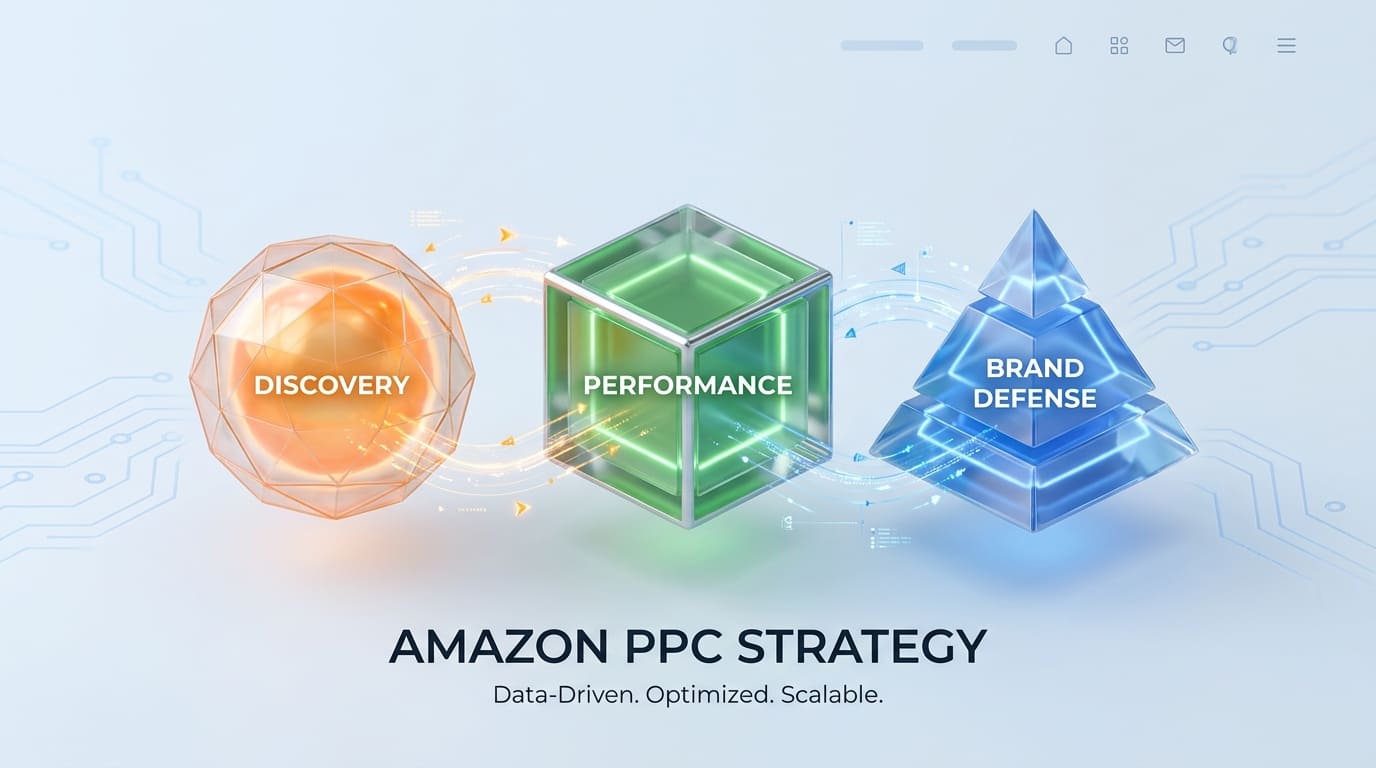
A profitable Amazon PPC strategy is built on clean campaign separation. Each campaign should have one purpose. Discovery, performance, and brand defense should not be mixed together because each layer needs different budgets, bids, and success metrics.
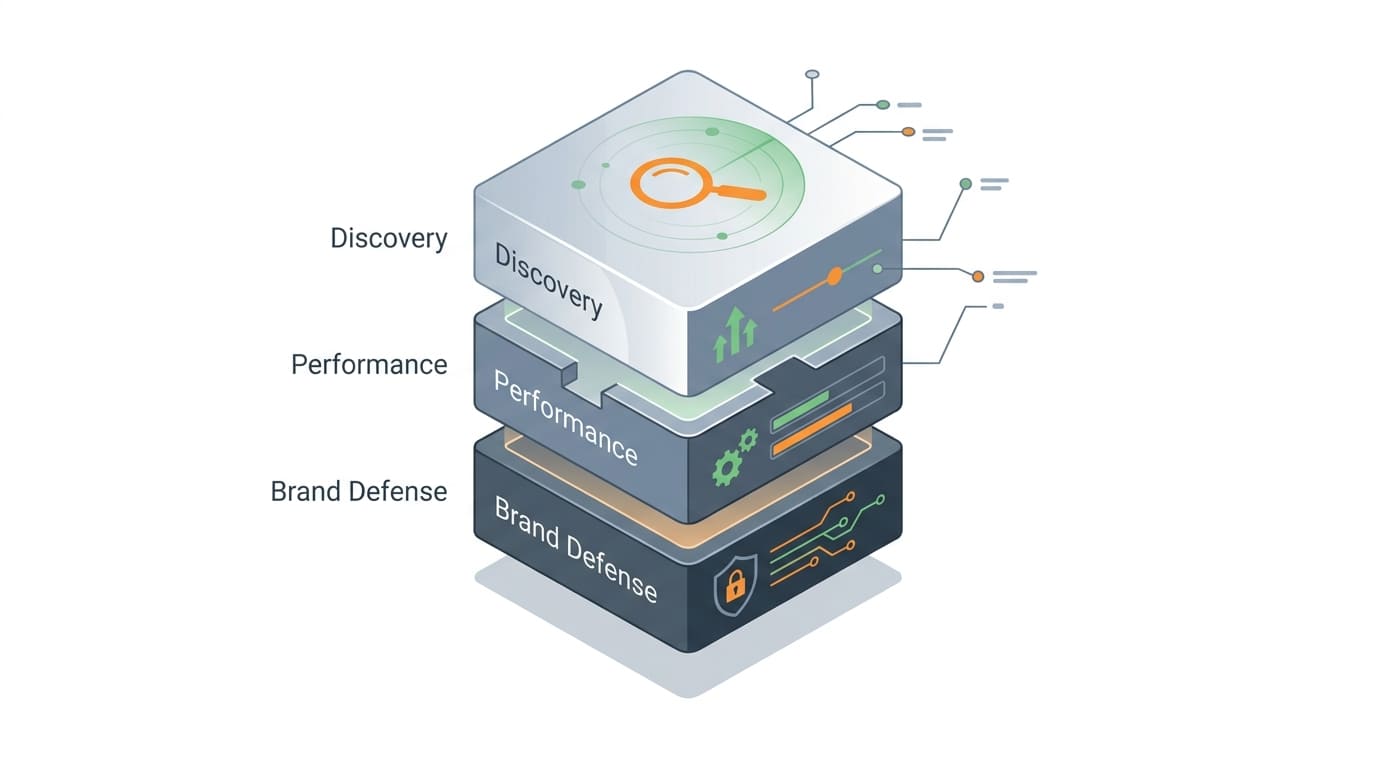
Tier 1 – Auto Discovery Campaigns
Auto campaigns let Amazon match your ads to relevant search terms using listing content and shopper behavior. Their primary job is data collection. They should be reviewed weekly to identify converting search terms and irrelevant spend.
Tier 2 – Manual Performance Campaigns
Manual performance campaigns scale what you already know works. Exact Match, Phrase Match, and Broad Match keywords should be separated so reporting remains clean and bid decisions are easier.
Target CPC = Selling Price x Target ACoS x Conversion Rate.
Example: $40 product x 25% target ACoS x 12% CVR = $1.20 maximum CPC.
Tier 3 – Brand Defense Campaigns
Brand defense campaigns protect branded search traffic from competitors. These campaigns usually have lower CPC and lower ACoS because shoppers searching your brand already have high purchase intent.
| Tier | Campaign Purpose | Expected ACoS | Budget Split |
|---|---|---|---|
| Auto Discovery | Find new keywords and ASINs | Higher during data collection | 20-30% |
| Manual Performance | Scale proven keywords profitably | Below break-even | 50-60% |
| Brand Defense | Protect branded search traffic | Usually very low | 15-20% |
5 Deep Keyword Research: The Foundation of Every Winning Campaign
Keyword research is the foundation of Amazon PPC. Strong keyword research helps you understand search intent, buyer language, category competition, and which terms deserve budget first.
For seller education and platform training, Amazon also maintains Seller University and Amazon Ads Academy certifications.
Where to Find Your Best Keywords
- Amazon search bar autocomplete: Type your main product term and record real shopper suggestions.
- Competitor listings: Study titles, bullets, A+ Content, and backend keyword patterns.
- Search Term Reports: Use existing campaign data to identify actual buyer behavior.
- Keyword tools: Use tools like Jungle Scout, Helium 10, or SellerApp for search volume and competition estimates.
- Product reviews: Mine customer language for benefit-driven keyword ideas.
Keyword Intent: Which to Prioritize First
| Keyword Type | Example | Priority | Why |
|---|---|---|---|
| Exact buyer intent | “buy wireless earbuds waterproof” | Highest | Shopper is close to purchase |
| Long-tail specific | “wireless earbuds for running under $50” | High | Lower competition and stronger intent |
| Category broad | “wireless earbuds” | Medium | High volume but expensive and competitive |
| Informational | “best earbuds 2026” | Lower | Research intent, not always purchase intent |
6 Keyword Harvesting: Turning Search Term Data Into Profit
Keyword harvesting is the process of identifying converting search terms from auto, broad, or phrase campaigns and moving them into controlled manual Exact Match campaigns. It should be a weekly operating system, not a one-time task.
- Run auto campaigns for 14-21 days before evaluating Give Amazon enough time to collect useful search term data before making decisions.
- Pull the Amazon Search Term Report Focus on clicks, spend, orders, CVR, CPC, and ACoS.
- Identify winners Promote search terms with enough clicks and profitable conversions into Exact Match campaigns.
- Move winners into manual campaigns Add the converting term to a manual campaign and control bids directly.
- Add waste terms as negative keywords Terms with spend and no conversions should be blocked where appropriate.
- Repeat every 7 days Weekly harvesting compounds performance improvement over time.
7 Amazon PPC Bid Strategy: When to Use Each Bidding Type
Amazon provides several bidding options. Choosing the wrong bid strategy can either waste budget or limit visibility when you need it most. For official bidding guidance, review Amazon Ads’ dynamic bidding guide.
| Bidding Type | How It Works | Best Used For |
|---|---|---|
| Dynamic – Up and Down | Amazon raises or lowers bids based on conversion probability | Launches, ranking pushes, and visibility campaigns |
| Dynamic – Down Only | Amazon can lower bids for low-intent clicks but does not raise them | Scaling proven campaigns and improving efficiency |
| Fixed Bids | Amazon uses your exact bid without dynamic adjustment | Brand defense and exact match winners |
Pro Tip: Never change bids, budgets, keywords, and placements in the same review session. Change one variable at a time and wait long enough to evaluate the result.
8 Optimize Your Listing Before Scaling Ads
Every dollar you spend on PPC sends traffic to a product page. If that page does not convert, your ACoS will stay high no matter how good your campaign structure is.

- Main image: Use a sharp white-background image with the product filling most of the frame.
- Title: Include the primary keyword and key purchase attributes naturally.
- Bullet points: Address objections, benefits, use cases, and differentiators.
- A+ Content: Use brand visuals to improve trust and explain the product faster.
- Reviews: Build enough social proof before aggressive scaling.
- Price competitiveness: Make sure your offer can compete in the search results.
9 Negative Keywords: Cutting Waste and Protecting Budget
Negative keywords are one of the highest-ROI actions in Amazon PPC. Every irrelevant click that does not convert is wasted budget.
Build Your Negative Keyword List From Day One
Seed your negative list with obvious non-buyers and irrelevant modifiers. Common examples include “free,” “cheap,” “used,” “DIY,” “how to,” and unrelated product terms that could trigger broad traffic.
- Negative Exact: Blocks only that exact query.
- Negative Phrase: Blocks searches containing that phrase sequence.
10 Advanced Targeting: Offensive and Defensive Campaigns
Once your core PPC structure is stable, advanced targeting can accelerate growth. This includes competitor ASIN targeting, defensive ASIN targeting, Sponsored Brand Video, and branded keyword defense.
Before expanding into advanced ad formats, compare your campaign plan against Amazon’s official getting started guide for sponsored ads.
Defensive ASIN Targeting
Use Sponsored Display and Sponsored Products to advertise on your own product pages. This helps cross-sell related products and reduces competitor visibility on your listings.
Offensive ASIN Targeting
Advertise directly on competitor product pages when you have a clear advantage such as stronger reviews, better price, better images, or stronger value proposition.
Pro Tip: Keep competitor targeting campaigns separate from core keyword campaigns so you can evaluate profitability independently.
11 ACoS vs TACoS: The Metric That Reveals True Growth
TACoS = Total Ad Spend divided by Total Revenue. Unlike ACoS, TACoS includes organic sales. A declining TACoS with growing revenue is a strong signal that PPC is building organic momentum.
ACoS tells you how efficient a specific campaign is. TACoS tells you whether your advertising is building the business or making it dependent on paid traffic.
| Growth Stage | Target TACoS | What It Means |
|---|---|---|
| Launch | Higher acceptable range | Investment in visibility, data, and sales velocity |
| Scale | Declining trend | Organic rankings are improving |
| Mature | Lower and stable | Strong organic base with ads supporting defense and growth |
12 How to Scale Profitable Amazon PPC Campaigns
Scaling too fast can destroy profitable campaigns. Instead of doubling budgets overnight, scale gradually based on consistent performance data.
- Clicks but no conversions Investigate listing quality, price, reviews, or keyword relevance before spending more.
- Sales but ACoS too high Lower bids gradually rather than cutting budget immediately.
- Sales with ACoS below target Increase budget by 20-30% and monitor performance.
- No clicks after 14 days Review bid competitiveness, impressions, and main image appeal.
13 Common Amazon PPC Mistakes Sellers Make in 2026
Setting Up and Walking Away
Campaigns left unmonitored waste budget as competitors, bids, and category behavior change.
Launching Too Many Ad Types at Once
Too many campaign types fragment budget and make attribution unclear.
Ignoring the Search Term Report
The Search Term Report reveals wasted spend and profitable keyword discoveries.
Chasing ACoS Instead of TACoS
A low ACoS can still hurt growth if it comes from cutting visibility instead of improving efficiency.
14 Amazon PPC Strategy Checklist
Use this checklist before launching a new PPC campaign or auditing existing campaigns.
Pre-Launch
- Break-even ACoS calculated: Use actual product margin, not guesswork.
- Target ACoS set: Keep it below break-even unless intentionally launching.
- Listing optimized: Improve title, images, bullets, A+ Content, and reviews.
- Negative keyword seed list created: Block obvious waste before launch.
- Campaign structure planned: Separate Auto, Manual, and Brand Defense campaigns.
Weekly Optimization
- Search Term Report reviewed: Identify winners and waste.
- Winning terms harvested: Move profitable terms into Exact Match campaigns.
- Negative keywords added: Block irrelevant or non-converting terms.
- Bids adjusted: Change one major variable at a time.
- TACoS tracked: Monitor whether PPC is improving total business performance.
15 Frequently Asked Questions
A good ACoS depends on your product margin. Start with your profit margin to calculate break-even ACoS, then set a target 5 to 10 percentage points below it when profitability is the goal.
Your budget should be based on revenue goals, margin, launch stage, and keyword competition. A practical starting point is to allocate a controlled daily budget, collect data, then scale campaigns that prove profitable.
Use both. Auto campaigns help discover search terms, while manual campaigns give you tighter control over bids, budgets, and keyword intent.
You can usually collect useful search term data within 14 to 21 days. Stronger optimization trends often take 30 to 60 days, while organic ranking effects may take longer.
Keyword harvesting means finding converting search terms from auto, broad, or phrase campaigns and moving them into manual Exact Match campaigns for better bid control.
ACoS measures ad spend against ad-attributed sales. TACoS measures ad spend against total revenue, including organic sales. TACoS is better for understanding whether PPC is helping the whole business grow.
Yes, if it is structured correctly. New products usually need PPC to generate visibility, sales velocity, keyword data, and early ranking signals.